This is default featured slide 1 title

Go to Blogger edit html and find these sentences.Now replace these sentences with your own descriptions.

This is default featured slide 2 title

Go to Blogger edit html and find these sentences.Now replace these sentences with your own descriptions.

This is default featured slide 3 title

Go to Blogger edit html and find these sentences.Now replace these sentences with your own descriptions.

This is default featured slide 4 title

Go to Blogger edit html and find these sentences.Now replace these sentences with your own descriptions.

This is default featured slide 5 title

Go to Blogger edit html and find these sentences.Now replace these sentences with your own descriptions.

Monday, December 5, 2011

Evan Rachal Wood Biography


Evan Rachel Wood (born September 7, 1987) is an American actress and singer. Evan Rachel Wood  began her acting career in the late 1990s, appearing in several television series, including American Gothic and Once and Again. Evan Rachel Wood made her debut as a leading film actress in Little Secrets (2002) and became well known after her transition to a more adult-oriented Golden Globe-nominated role in the teen drama film Thirteen (2003).


Wood continued acting mostly in independent films, including Pretty Persuasion (2005), Down in the Valley (2006), Running with Scissors (2006), and in the big studio production Across the Universe (2007). Wood has been described by The Guardian as "one of the best actresses of her generation." Wood was engaged to Marilyn Manson until August 2010.


Early life and family
Evan Rachel Wood was born in Raleigh, North Carolina. Evan Rachel Wood  father, Ira David Wood III, is a locally prominent actor, singer, theater director, and playwright who is the Executive Director of a local regional theatre company called Theatre in the Park. Her mother, Sara Lynn Moore (born March 6, 1958), is an actress, director, and acting coach.Wood's brother, Ira David Wood IV, is also an actor; she has another brother, Dana. Her paternal aunt, Carol Winstead Wood, is a Hollywood production designer.
Wood and her brothers were actively involved in Theatre in the Park while growing up, including an appearance by her in the 1987 production of her father's internationally renowned musical comedy adaptation of A Christmas Carol when she was just a few months old. Subsequently, she played the Ghost of Christmas Past in several productions at the theater, and she later starred as Helen Keller alongside her mother (who played Annie Sullivan) in a production of The Miracle Worker, under her father's direction.

Career
Early Works: 1994–2000
Wood began her career appearing in several made-for-television films from 1994 onward,also playing an occasional role in the television series American Gothic. In 1996, Wood's parents separated and later divorced, and Wood moved with her mother to her mother's native Los Angeles County, California.After a one-season role on the television drama Profiler, Wood was cast in the supporting role of Jessie Sammler on the television show Once and Again.
Wood's first major screen role was in the low-budget 1998 film Digging to China, which also starred Kevin Bacon and Mary Stuart Masterson. The film won the Children's Jury Award at the Chicago International Children's Film Festival.Wood remembers the role as initially being hard, but notes that it "eventually led to her decision that acting is something she might never want to stop doing."Evan Rachel Wood also had a role in Practical Magic, a family fantasy film directed by Griffin Dunne and starring Sandra Bullock and Nicole Kidman, that same year.

2001–2005
Evan Rachel Wood in 2005
Wood made her teenage debut as a leading film actress in 2002's Little Secrets, directed by Blair Treu, where she played aspiring 14-year-old concert violinist Emily Lindstrom. For that role, she was nominated for Best Leading Young Actress at the Young Artist Awards. That same year, Wood played a supporting role in the Andrew Niccol-directed science fiction satirical drama film, S1m0ne, which starred Al Pacino.
Wood's breakthrough movie role followed with the 2003 film Thirteen. Evan Rachel Wood  played the role of Tracy Louise Freeland, one of two young teens who sink into a downward spiral of hard drugs, sex, and petty crime. Evan Rachel Wood performance was nominated for a Golden Globe Award as Best Actress - Drama and for a Screen Actors Guild (SAG) Award for Best Actress. During the time of Thirteen's release, Vanity Fair named Wood as one of the It Girls of Hollywood, and she appeared, along with the other actresses, on the magazine's July 2003 cover.A supporting role opposite Cate Blanchett and Tommy Lee Jones in Ron Howard's The Missing, in which she played the kidnapped daughter, Lilly Gilkeson, in a Searchers-style western, followed the same year. Also in 2003 she played the part of Nora Easton in the episode "Got Murder?" of TV series CSI: Crime Scene Investigation.
In 2005, Wood appeared in the Mike Binder-directed The Upside of Anger, opposite Kevin Costner and Joan Allen, a well-reviewed film in which Wood played Lavender "Popeye" Wolfmeyer, one of four sisters dealing with their father's absence. Evan Rachel Wood character also narrated the film.
Wood's next two starring roles were in dark independent films. In the 2005 Grand Jury Prize Sundance Film Festival nominee Pretty Persuasion, a black comedy/satirical focusing on themes of sexual harassment and discrimination in schools and attitudes about females in media and society, Wood played Kimberly Joyce, a villainous, sexually active high-schooler. One critic commented, "Wood does flip cynicism with such precise, easy rhythms and with such obvious pleasure in naughtiness that she's impossible to hate.
In Down in the Valley, which was directed by David Jacobson, Wood's character, Tobe, falls in love with an older man, a cowboy who is at odds with modern society (Edward Norton). Of her performance, it was written that "Wood conveys every bit of the adamant certainty and aching vulnerability inherent in late adolescence.Wood has commented on her choice of sexually themed roles, saying that she is not aiming for the "shock factor" in her film choices.
In 2005, Wood starred in the music videos for Bright Eyes' "At the Bottom of Everything" and Green Day's "Wake Me Up When September Ends".

2006–present
In September 2006, Wood received Premiere magazine's "Spotlight Award for Emerging Talent."Also in 2006, she was described by The Guardian as being "wise beyond her years" and as "one of the best actresses of her generation."
Later in 2006, Wood appeared with an all-star ensemble cast as Natalie Finch in the Golden Globe-nominated 2006 comedy-drama film Running with Scissors. Directed by Ryan Murphy and starring Annette Bening, the film was based on the memoir by Augusten Burroughs, which is a semi-autobiographical account of Burroughs' childhood in a dysfunctional family. Wood was awarded the 2007 Cannes Film Festival Chopard Trophy for Female Revelation for her performance.
Wood had roles in two films released in September 2007. King of California, which premiered at the Sundance Film Festival,a story of a bipolar jazz musician (Michael Douglas) and his long-suffering teenage daughter, Miranda (Wood), who are reunited after his two-year stay in a mental institution and who embark on a quixotic search for Spanish treasure. One review praised Wood's performance as "excellent".
Across the Universe, a Julie Taymor-directed musical that was nominated for a Golden Globe and an Academy Award and was set in Liverpool, New York City, and Vietnam, focused on the tribulations of several characters during the counter-cultural revolution of the 1960s. It was set to the songs of The Beatles. Wood, who has described the music of The Beatles as a major part of her life, played Lucy, who develops a relationship with Jude (Jim Sturgess).The film featured her singing musical numbers and she describes the role as her favorite, calling director Julie Taymor "one of the most amazing directors out there."One critic wrote that "Wood brings much-needed emotional depth."
Wood provided the voice of an alien named Mala, a mechanically inclined free-thinker, in Battle for Terra, a 2008 computer-animated science fiction film about a peaceful alien planet that faces destruction from colonization by the displaced remainder of the human race. The film won the 2008 Grand Prize at the Ottawa International Animation Festival. The film showed at the San Francisco International Film Festival, where she received an award at the Midnight Awards along with Elijah Wood.
Wood starred in 2008's Vadim Perelman-directed The Life Before Her Eyes, based on the Laura Kasischke novel of the same name, about the friendship of two teens of opposite character who are involved in a Columbine-like shooting incident at their school and are forced to make an impossible choice. Wood played the younger version of Uma Thurman's character, Diana. One critic cited her performance as "hands-down extraordinary".Wood stated that she intended the film to be the last one in which she played a teenager.
In the same year, she also co-starred in director Darren Aronofsky's The Wrestler,winner of the Golden Lion Award for Best Film at the Venice Film Festival, about Randy "Ram" Robinson (Mickey Rourke), a professional wrestler from the 1980s who is forced to retire after a heart attack threatens to kill him the next time he wrestles. Wood played Stephanie, Randy "Ram" Robinson's estranged daughter. Of her performance, one critic wrote, "Once her character stops stonewalling her father and hears him out, Wood provides a fine foil for Rourke in their turbulent scenes together."
Wood has a role in Woody Allen's Whatever Works,which premiered at the 2009 Tribeca Film Festival. Evan Rachel Wood  plays the young wife of Larry David's character. In May 2009, she played Juliet in six fundraising performances of William Shakespeare's Romeo and Juliet at the Theater In The Park.The production was directed by her brother, who also starred.
Wood had a recurring role in the second and third seasons of the HBO supernatural drama series, True Blood, from 2009 to 2011 as Sophie-Anne Leclerq. Evan Rachel Wood appeared at the 2010 MTV Video Music Awards on September 12, 2010.Wood had a role in the film The Conspirator, which premiered at Ford's Theatre in Washington D. C. in April, 2011, directed by Robert Redford (about the conspiracy surrounding the assassination of Abraham Lincoln).

In production
Wood has been attached to play writer Anne Brontë in the film Brontë, the title character in Flora Plum and will be involved in the film Phantasmagoria: The Visions of Lewis Carroll.Variety reported in May 2010 that Wood and Marilyn Manson were attached to star in a slasher film entitled Splatter Sisters.

Personal life
Wood has described her religion as Jewish (her mother is a convert to Judaism and her father is Christian).Evan Rachel Wood briefly attended Cary Elementary, a public school in Cary, North Carolina. Evan Rachel Wood  was home-schooled and received her high school diploma at age 15.Wood has a black belt in taekwondo.
In 2007, Wood's relationship with Marilyn Manson became public. The two met at a party at the Chateau Marmont Hotel; Wood has stated that she was attracted to Manson's frequent use of black eye liner and once described their relationship as "healthy and loving."Two portraits of Wood, painted by Manson, have been exhibited at the Celebritarian Corporation Gallery of Fine Art.Wood is also the inspiration behind Manson's song "Heart-Shaped Glasses", and she appeared with Manson in the song's music video. Manson has said that Wood's appearance in the film was the highest-paid music video role ever.It was reported in early January 2010 that the couple was engaged to be married.On August 17, 2010, People magazine reported that the couple had ended their engagement earlier that month.
In April 2011, Wood came out as bisexual in an interview with Esquire.

Emmanuelle Seigner Biography


Seigner was born in Paris, France to a photographer father and a journalist mother.Seigner is the granddaughter of the respected actor Louis Seigner (1903–1991) and sister of the actress Mathilde Seigner. Seigner was educated at a Catholic convent school, and began modelling at the age of fourteen. Capitalizing on her appearance she achieved international status as a professional model.Seigner married the Polish film director Roman Polanski on 30 August 1989. They have two children: daughter Morgane and son Elvis. He directed her in Frantic (1988), opposite Harrison Ford, and later in Bitter Moon (1992), as well as The Ninth Gate (1999), co-starring Johnny Depp. In 2010, Seigner was featured in Jerzy Skolimowski's Essential Killing, which went on to win the Special Jury Prize at the Venice Film Festival.
Seigner appears as the main character in the music video "Hands Around My Throat" by Death in Vegas. In 2006, she became lead singer of the pop rock band Ultra Orange, and the group's name was changed to Ultra Orange & Emmanuelle. Seigner and Polanski live with their two children in Paris. Seigner is an ambassadress of the Polish brand Dr Irena Eris.
Seigner in concert at the Mermaid Theatre London, 7 July 2008


Seigner with husband Roman Polanski at the César Awards 2011.
L'Année des méduses (1984)
Détective (1985)... Princess of the Bahamas
Cours privé (1986)... Zanon
Frantic (1988)... Michelle
Il Male oscuro (1990)... The Girl
Bitter Moon (1992)... Mimi
Le Sourire (1994)... Odile
Pourvu que ça dure (1996)... Julie Neyrac
Nirvana (1997)... Lisa
La Divine poursuite (1997)... Bobbi
R.P.M. (1997)... Michelle Claire
Place Vendôme (1998)... Nathalie
The Ninth Gate (1999)... The Girl
Buddy Boy (1999)... Gloria
Streghe verso nord (2001)... Lucilla
Corps à corps (2003)... Laura Bartelli
Os Imortais (2003)... Madeleine Durand
Backstage (2005)... Lauren Waks
La Vie en Rose (2007)... Titine
Le Scaphandre et le papillon (The Diving Bell and the Butterfly) (2007)... Céline
Berlin: Live at St. Ann's Warehouse (2008)... Caroline
Giallo (2009)... Linda
Essential Killing (2010)... Margaret

Emmanuelle Seigner Biography


Seigner was born in Paris, France to a photographer father and a journalist mother.Seigner is the granddaughter of the respected actor Louis Seigner (1903–1991) and sister of the actress Mathilde Seigner. Seigner was educated at a Catholic convent school, and began modelling at the age of fourteen. Capitalizing on her appearance she achieved international status as a professional model.Seigner married the Polish film director Roman Polanski on 30 August 1989. They have two children: daughter Morgane and son Elvis. He directed her in Frantic (1988), opposite Harrison Ford, and later in Bitter Moon (1992), as well as The Ninth Gate (1999), co-starring Johnny Depp. In 2010, Seigner was featured in Jerzy Skolimowski's Essential Killing, which went on to win the Special Jury Prize at the Venice Film Festival.
Seigner appears as the main character in the music video "Hands Around My Throat" by Death in Vegas. In 2006, she became lead singer of the pop rock band Ultra Orange, and the group's name was changed to Ultra Orange & Emmanuelle. Seigner and Polanski live with their two children in Paris. Seigner is an ambassadress of the Polish brand Dr Irena Eris.
Seigner in concert at the Mermaid Theatre London, 7 July 2008


Seigner with husband Roman Polanski at the César Awards 2011.
L'Année des méduses (1984)
Détective (1985)... Princess of the Bahamas
Cours privé (1986)... Zanon
Frantic (1988)... Michelle
Il Male oscuro (1990)... The Girl
Bitter Moon (1992)... Mimi
Le Sourire (1994)... Odile
Pourvu que ça dure (1996)... Julie Neyrac
Nirvana (1997)... Lisa
La Divine poursuite (1997)... Bobbi
R.P.M. (1997)... Michelle Claire
Place Vendôme (1998)... Nathalie
The Ninth Gate (1999)... The Girl
Buddy Boy (1999)... Gloria
Streghe verso nord (2001)... Lucilla
Corps à corps (2003)... Laura Bartelli
Os Imortais (2003)... Madeleine Durand
Backstage (2005)... Lauren Waks
La Vie en Rose (2007)... Titine
Le Scaphandre et le papillon (The Diving Bell and the Butterfly) (2007)... Céline
Berlin: Live at St. Ann's Warehouse (2008)... Caroline
Giallo (2009)... Linda
Essential Killing (2010)... Margaret

Emmanuelle Beart Biography

Emmanuelle Beart is the daughter of French singer and poet Guy Béart and Italian-Greek mother,Geneviève Galea.Emmanuelle Beart was born on the 14 August 1965 in St. Tropez, France. After her parents divorce she was raised by her mother in a remote mountain village in provence with her three brothers and her sister . As a teenager, left for Montreal. There she, apparently, met Robert Altman who encouraged her to become an actress. Although she even took a screen test for him, nothing came of it. Emmanuelle Beart then attended a drama school in Paris before being cast in Premiers Désirs three months later.


Emmanuelle Beart first became well known in Manon des Sources the sequel to Jean de Florette when she won Best Supporting Actress Cesar. Emmanuelle has risen to great national and international fame as an actress not merely because of her beauty, she is also capable of deep emotional empathy with the character she is playing. Like many actresses she spends a long time preparing her characters, in Un Coeur en Hiver for instance she apparently practised the violin every day for eighteen months.


Emmanuelle had a long relationship with Daniel Auteuil, her co-star in several films, they were married in 1993 but have subsequently separated. Emmanuelle Beart has a daughter, Nelly (born April 18th 1992), by Auteuil, and a young son Johan (born March 1996) by her current boyfriend David Moreau (the half-brother of French actor Patrick Bruel). But she says her children will not interfere with her acting career: "For the moment, I just put them in a backpack and bring them along with me. I love the fact that they can travel with me. I just decided that I would not put my professional life on hold to raise children. I know that sounds selfish to a lot of people and I don't know if what I'm doing is the right thing. But that's the way I'm doing it."
One of her greatest irritations is the curiosity of the press: "It's madness. They follow me. I sue them. That's the deal. I have to admit that it's getting painful to stay polite... I give everything I have to give on the screen. I feel I don't owe the public anything else."


Recent film releases include Don Juan and Le Voleur de Vie, with more projects in the pipeline she has made a positive return to film after nearly two and a half years absence.

Emmanuelle Beart Biography

Emmanuelle Beart is the daughter of French singer and poet Guy Béart and Italian-Greek mother,Geneviève Galea.Emmanuelle Beart was born on the 14 August 1965 in St. Tropez, France. After her parents divorce she was raised by her mother in a remote mountain village in provence with her three brothers and her sister . As a teenager, left for Montreal. There she, apparently, met Robert Altman who encouraged her to become an actress. Although she even took a screen test for him, nothing came of it. Emmanuelle Beart then attended a drama school in Paris before being cast in Premiers Désirs three months later.


Emmanuelle Beart first became well known in Manon des Sources the sequel to Jean de Florette when she won Best Supporting Actress Cesar. Emmanuelle has risen to great national and international fame as an actress not merely because of her beauty, she is also capable of deep emotional empathy with the character she is playing. Like many actresses she spends a long time preparing her characters, in Un Coeur en Hiver for instance she apparently practised the violin every day for eighteen months.


Emmanuelle had a long relationship with Daniel Auteuil, her co-star in several films, they were married in 1993 but have subsequently separated. Emmanuelle Beart has a daughter, Nelly (born April 18th 1992), by Auteuil, and a young son Johan (born March 1996) by her current boyfriend David Moreau (the half-brother of French actor Patrick Bruel). But she says her children will not interfere with her acting career: "For the moment, I just put them in a backpack and bring them along with me. I love the fact that they can travel with me. I just decided that I would not put my professional life on hold to raise children. I know that sounds selfish to a lot of people and I don't know if what I'm doing is the right thing. But that's the way I'm doing it."
One of her greatest irritations is the curiosity of the press: "It's madness. They follow me. I sue them. That's the deal. I have to admit that it's getting painful to stay polite... I give everything I have to give on the screen. I feel I don't owe the public anything else."


Recent film releases include Don Juan and Le Voleur de Vie, with more projects in the pipeline she has made a positive return to film after nearly two and a half years absence.

Ellen Burstyn Biography

Actress. Born Edna Rae Gillooly, on December 7, 1932, in Detroit, Michigan. Burstyn left home at the age of 18 to work as a model. In the late 1950s, she landed her first regular acting gig, as a dancer on television’s The Jackie Gleason Show, billed as Erica Dean. Ellen Burstyn made her Broadway debut in 1957 in Fair Game, using the stage name Ellen McRae. Ellen Burstyn would keep that name for the next 10 years, while working steadily on television (the daytime drama The Doctors in 1964 and the western-themed series The Iron Horse from 1966-68) and in minor film roles (1964's Goodbye, Charlie).


After changing her name yet again, this time to Ellen Burstyn, she landed what would become her breakthrough role, that of Lois Farrow in The Last Picture Show (1971), costarring Jeff Bridges and Cybill Shepherd. Ellen Burstyn performance earned Burstyn her first Academy Award nomination, for Best Supporting Actress. Ellen Burstyn earned a second Oscar nod this time for Best Actress, two years later, for her role as the middle-aged actress whose daughter (Linda Blair) is possessed by demonic forces in The Exorcist, directed by William Friedkin.


In 1974, Burstyn produced and starred in Martin Scorsese's emotional drama Alice Doesn't Live Here Anymore, winning an Academy Award for Best Actress for her portrayal of a single mother struggling to support herself and her young son. In addition to her triumphs on screen, Burstyn took home a Tony Award in 1975 for her performance opposite Charles Grodin in Same Time, Next Year. Ellen Burstyn later reprised her role in the 1978 film version, co-starring Alan Alda, and garnered another Oscar nomination in the lead actress category. Ellen Burstyn fourth Best Actress nod came just two years later, for Resurrection (1980).


A respected member of both the film and theater community, Burstyn served as the first female president of the Actor's Equity Association from 1982 to 1985. Also in 1982, she succeeded Lee Strasberg as the co-artistic director (with Al Pacino) of the Actors Studio. Burstyn would serve in the Actors Studio post for the next six years (Pacino stepped down in 1984). Throughout the 1980s and 1990s, she also built up a considerable resume of acclaimed television features and series, beginning in 1981 with her Emmy-nominated performance in the fact-based miniseries The People vs. Jean Harris. In addition to such dramatic TV movies as Surviving (1985), Into Thin Air (1985), and the Emmy-nominated Pack of Lies (1987), Burstyn tried her hand at comedy with her own series, The Ellen Burstyn Show (1986-87).

Ellen Burstyn Biography

Actress. Born Edna Rae Gillooly, on December 7, 1932, in Detroit, Michigan. Burstyn left home at the age of 18 to work as a model. In the late 1950s, she landed her first regular acting gig, as a dancer on television’s The Jackie Gleason Show, billed as Erica Dean. Ellen Burstyn made her Broadway debut in 1957 in Fair Game, using the stage name Ellen McRae. Ellen Burstyn would keep that name for the next 10 years, while working steadily on television (the daytime drama The Doctors in 1964 and the western-themed series The Iron Horse from 1966-68) and in minor film roles (1964's Goodbye, Charlie).


After changing her name yet again, this time to Ellen Burstyn, she landed what would become her breakthrough role, that of Lois Farrow in The Last Picture Show (1971), costarring Jeff Bridges and Cybill Shepherd. Ellen Burstyn performance earned Burstyn her first Academy Award nomination, for Best Supporting Actress. Ellen Burstyn earned a second Oscar nod this time for Best Actress, two years later, for her role as the middle-aged actress whose daughter (Linda Blair) is possessed by demonic forces in The Exorcist, directed by William Friedkin.


In 1974, Burstyn produced and starred in Martin Scorsese's emotional drama Alice Doesn't Live Here Anymore, winning an Academy Award for Best Actress for her portrayal of a single mother struggling to support herself and her young son. In addition to her triumphs on screen, Burstyn took home a Tony Award in 1975 for her performance opposite Charles Grodin in Same Time, Next Year. Ellen Burstyn later reprised her role in the 1978 film version, co-starring Alan Alda, and garnered another Oscar nomination in the lead actress category. Ellen Burstyn fourth Best Actress nod came just two years later, for Resurrection (1980).


A respected member of both the film and theater community, Burstyn served as the first female president of the Actor's Equity Association from 1982 to 1985. Also in 1982, she succeeded Lee Strasberg as the co-artistic director (with Al Pacino) of the Actors Studio. Burstyn would serve in the Actors Studio post for the next six years (Pacino stepped down in 1984). Throughout the 1980s and 1990s, she also built up a considerable resume of acclaimed television features and series, beginning in 1981 with her Emmy-nominated performance in the fact-based miniseries The People vs. Jean Harris. In addition to such dramatic TV movies as Surviving (1985), Into Thin Air (1985), and the Emmy-nominated Pack of Lies (1987), Burstyn tried her hand at comedy with her own series, The Ellen Burstyn Show (1986-87).

Ellen Barkin Biography

Name:Ellen Barkin
Date of Birth:April 16, 1954


Ellen Barkin is probably best known for her steamy roles opposite Dennis Quaid in The Big Easy (1986) and Al Pacino in Sea of Love (1989). But this unconventionally beautiful actress never believed the hype about her own sex appeal.


Born in the Bronx, N.Y. to a father who was a chemical salesman and a mother who was a hospital administrator, she attended the renowned High School for the Performing Arts in New York and went on to study history and drama at Hunter College. Barkin continued honing her craft at the famed Actors Studio and made her stage debut in 1980 in the play Irish Coffee.


Like so many actors, she got her start on television in a soap opera. Barkin landed a role on Search for Tomorrow, but continued to appear on stage. Ellen Barkin made the leap to feature films in 1982 playing the sole female lead in the Barry Levinson film Diner (1982). It wasn't until 1987 though, that Barkin had her breakthrough role in The Big Easy (1986) and firmly established herself as a sex symbol. Two years later she proved she could hold her own against anyone when she starred opposite Pacino in Sea of Love. At this point in her career Barkin had Hollywood in the palm of her hand, but she chose motherhood over superstardom.


"I guess that was the point at which I became what one would consider a movie star, but I made a conscious decision that I wanted to be a mother at that point." In 1987 during the making of the film Siesta (1987), the actress met and fell in love with her co-star, Irish actor Gabriel Byrne. The two married and had two children, Jack and Romy. In 1993 the couple made the announcement that they were separating. The split was well regarded in Hollywood as one of the most amicable on record and the two remain close.


The actress went on to star with acting heavyweights in films such as This Boy's Life (1993) with Robert DeNiro and Leonardo DiCaprio. In 1995 she starred as Calamity Jane in Wild Bill (1995) and began an affair with the much younger actor David Arquette (17 years her junior). At the time the relationship was front page fodder for the tabloids, but it soon cooled and the two remained friends.

Ellen Barkin Biography

Name:Ellen Barkin
Date of Birth:April 16, 1954


Ellen Barkin is probably best known for her steamy roles opposite Dennis Quaid in The Big Easy (1986) and Al Pacino in Sea of Love (1989). But this unconventionally beautiful actress never believed the hype about her own sex appeal.


Born in the Bronx, N.Y. to a father who was a chemical salesman and a mother who was a hospital administrator, she attended the renowned High School for the Performing Arts in New York and went on to study history and drama at Hunter College. Barkin continued honing her craft at the famed Actors Studio and made her stage debut in 1980 in the play Irish Coffee.


Like so many actors, she got her start on television in a soap opera. Barkin landed a role on Search for Tomorrow, but continued to appear on stage. Ellen Barkin made the leap to feature films in 1982 playing the sole female lead in the Barry Levinson film Diner (1982). It wasn't until 1987 though, that Barkin had her breakthrough role in The Big Easy (1986) and firmly established herself as a sex symbol. Two years later she proved she could hold her own against anyone when she starred opposite Pacino in Sea of Love. At this point in her career Barkin had Hollywood in the palm of her hand, but she chose motherhood over superstardom.


"I guess that was the point at which I became what one would consider a movie star, but I made a conscious decision that I wanted to be a mother at that point." In 1987 during the making of the film Siesta (1987), the actress met and fell in love with her co-star, Irish actor Gabriel Byrne. The two married and had two children, Jack and Romy. In 1993 the couple made the announcement that they were separating. The split was well regarded in Hollywood as one of the most amicable on record and the two remain close.


The actress went on to star with acting heavyweights in films such as This Boy's Life (1993) with Robert DeNiro and Leonardo DiCaprio. In 1995 she starred as Calamity Jane in Wild Bill (1995) and began an affair with the much younger actor David Arquette (17 years her junior). At the time the relationship was front page fodder for the tabloids, but it soon cooled and the two remained friends.

Elizabeth Taylor Biography

Elizabeth Rosemond Taylor was born in London, England, on February 27, 1932. Although she was born an English subject, her parents were Americans, art dealers from St. Louis, Missouri (her father had gone to London to set up a gallery). Elizabeth mother had been an actress on the stage, but gave up that vocation when she married. Elizabeth lived in London until the age of seven, when the family left for the US when the clouds of war began brewing in Europe in 1939. They sailed without her father, who stayed behind to wrap up the loose ends of the art business.


The family relocated to Los Angeles, where Mrs. Taylor's own family had moved. Mr. Taylor followed not long afterward. A family friend noticed the strikingly beautiful little Elizabeth and suggested that she be taken for a screen test. Elizabeth test impressed executives at Universal Pictures enough to sign her to a contract. Elizabeth first foray onto the screen was in There's One Born Every Minute (1942), released when she was ten. Universal dropped her contract after that one film, but Elizabeth was soon picked up by MGM.


The first production she made with that studio was Lassie Come Home (1943), and on the strength of that one film, MGM signed her for a full year. Elizabeth had minuscule parts in her next two films, The White Cliffs of Dover (1944) and Jane Eyre (1943) (the former made while she was on loan to 20th Century-Fox). Then came the picture that made Elizabeth a star: MGM's National Velvet (1944). Elizabeth played Velvet Brown opposite Mickey Rooney. The film was a smash hit, grossing over $4 million. Elizabeth now had a long-term contract with MGM and was its top child star. Elizabeth made no films in 1945, but returned in 1946 in Courage of Lassie (1946). In 1947, when she was 15, she starred in Life with Father (1947) with such heavyweights as William Powell, Irene Dunne and Zasu Pitts.
Throughout the rest of the 1940s and into the early 1950s Elizabeth appeared in film after film with mostly good results. Elizabeth busiest year was 1954, with roles in Rhapsody (1954), Beau Brummell (1954), The Last Time I Saw Paris (1954) and Elephant Walk (1954). Elizabeth was 22 now, and even at that young age was considered one of the world's great beauties. In 1955 she appeared in the hit Giant (1956) with James Dean.
Sadly, Dean never saw the release of the film, as he died in a car accident in 1955. The next year saw Elizabeth star in Raintree County (1957), an overblown epic made, partially, in Kentucky. Critics called it dry as dust. Despite the film's shortcomings, Elizabeth was nominated for an Academy Award for her portrayal of Southern belle Susanna Drake. However, on Oscar night the honor went to Joanne Woodward for The Three Faces of Eve (1957). In 1958 Elizabeth starred as Maggie Pollitt in Cat on a Hot Tin Roof (1958).
The film received rave reviews from the critics and Elizabeth was nominated again for an Academy Award for best actress, but this time she lost to Susan Hayward in I Want to Live! (1958). Elizabeth was still a hot commodity in the film world, though. In 1959 she appeared in another mega-hit and received yet another Oscar nomination for Suddenly, Last Summer (1959). Once again, however, she lost out, this time to Simone Signoret for Room at the Top (1959). Elizabeth Oscar drought ended in 1960 when she brought home the coveted statue for her flawless performance in BUtterfield 8 (1960) as Gloria Wandrous, a call girl who is involved with a married man. Some critics blasted the movie but they couldn't ignore her performance. There were no more films for Elizabeth for three years. Elizabeth left MGM after her contract ran out, but would do projects for the studio later down the road. In 1963 she starred in Cleopatra (1963), which was one of the most expensive productions up to that time--as was her salary, a whopping $1,000,000.

Elizabeth Taylor Biography

Elizabeth Rosemond Taylor was born in London, England, on February 27, 1932. Although she was born an English subject, her parents were Americans, art dealers from St. Louis, Missouri (her father had gone to London to set up a gallery). Elizabeth mother had been an actress on the stage, but gave up that vocation when she married. Elizabeth lived in London until the age of seven, when the family left for the US when the clouds of war began brewing in Europe in 1939. They sailed without her father, who stayed behind to wrap up the loose ends of the art business.


The family relocated to Los Angeles, where Mrs. Taylor's own family had moved. Mr. Taylor followed not long afterward. A family friend noticed the strikingly beautiful little Elizabeth and suggested that she be taken for a screen test. Elizabeth test impressed executives at Universal Pictures enough to sign her to a contract. Elizabeth first foray onto the screen was in There's One Born Every Minute (1942), released when she was ten. Universal dropped her contract after that one film, but Elizabeth was soon picked up by MGM.


The first production she made with that studio was Lassie Come Home (1943), and on the strength of that one film, MGM signed her for a full year. Elizabeth had minuscule parts in her next two films, The White Cliffs of Dover (1944) and Jane Eyre (1943) (the former made while she was on loan to 20th Century-Fox). Then came the picture that made Elizabeth a star: MGM's National Velvet (1944). Elizabeth played Velvet Brown opposite Mickey Rooney. The film was a smash hit, grossing over $4 million. Elizabeth now had a long-term contract with MGM and was its top child star. Elizabeth made no films in 1945, but returned in 1946 in Courage of Lassie (1946). In 1947, when she was 15, she starred in Life with Father (1947) with such heavyweights as William Powell, Irene Dunne and Zasu Pitts.
Throughout the rest of the 1940s and into the early 1950s Elizabeth appeared in film after film with mostly good results. Elizabeth busiest year was 1954, with roles in Rhapsody (1954), Beau Brummell (1954), The Last Time I Saw Paris (1954) and Elephant Walk (1954). Elizabeth was 22 now, and even at that young age was considered one of the world's great beauties. In 1955 she appeared in the hit Giant (1956) with James Dean.
Sadly, Dean never saw the release of the film, as he died in a car accident in 1955. The next year saw Elizabeth star in Raintree County (1957), an overblown epic made, partially, in Kentucky. Critics called it dry as dust. Despite the film's shortcomings, Elizabeth was nominated for an Academy Award for her portrayal of Southern belle Susanna Drake. However, on Oscar night the honor went to Joanne Woodward for The Three Faces of Eve (1957). In 1958 Elizabeth starred as Maggie Pollitt in Cat on a Hot Tin Roof (1958).
The film received rave reviews from the critics and Elizabeth was nominated again for an Academy Award for best actress, but this time she lost to Susan Hayward in I Want to Live! (1958). Elizabeth was still a hot commodity in the film world, though. In 1959 she appeared in another mega-hit and received yet another Oscar nomination for Suddenly, Last Summer (1959). Once again, however, she lost out, this time to Simone Signoret for Room at the Top (1959). Elizabeth Oscar drought ended in 1960 when she brought home the coveted statue for her flawless performance in BUtterfield 8 (1960) as Gloria Wandrous, a call girl who is involved with a married man. Some critics blasted the movie but they couldn't ignore her performance. There were no more films for Elizabeth for three years. Elizabeth left MGM after her contract ran out, but would do projects for the studio later down the road. In 1963 she starred in Cleopatra (1963), which was one of the most expensive productions up to that time--as was her salary, a whopping $1,000,000.

Elizabeth Taylor Pix,Pic,Picture,Image,Photo,Wallpaper,Shoot


Elizabeth Taylor Pix,Pic,Picture,Image,Photo,Wallpaper,Shoot


Elisabeth Shue Biography

Elisabeth Judson Shue was born on born Oct. 6, 1963 in Wilmington, DE. Her mother, Anne Harms (née Wells), was the vice president of the private division of the Chemical Banking Corporation, and her father, James Shue, was a lawyer and real estate developer who was the president of the International Food and Beverage Corporation. James was active in Republican politics and ran (unsuccessfully) for the U.S. Senate in New Jersey. Raised with her three brothers - including Andrew, who would follow in his sister's later footsteps by starring as the lovelorn taxi driver Billy Campbell on "Melrose Place" (FOX, 1992-99) - Shue was a fourth grader when her parents divorced. Elisabeth Shue  was very close to her siblings, and even worked with Andrew and John later in film projects. Another brother, William, died in 1988 from a swimming accident while on a family vacation. Shue attended Columbia High School in Maplewood, NJ, where she excelled in gymnastics. Several years later, both she and Andrew were inducted into the school's Hall of Fame in 1994.
Wellesley College was Shue's next academic venture and it was while attending the all-woman institution that the future star focused on her studies instead of boys and partying. During her junior year, a friend inspired Shue to work as an actress in television commercials. Elisabeth Shue booked several jobs right away including an ad for a Florida theme park, DeBeers diamonds, Hellman's mayonnaise, and fast food giant Burger King where she earned the nickname "Burger King Girl," due to her appearance in over 20 spots. A role in the short-lived TV series "Call to Glory" (Paramount TV, 1984-85) gave Shue great acting exposure, but it was her first feature film that same year that jump-started her career.
"The Karate Kid" (1984) was a martial arts teen drama that starred Tiger Beat poster boy Ralph Macchio, fresh off his success in Francis Ford Coppola's "The Outsiders" (1983). As Macchio's understanding girlfriend who helps give him the courage to take on the school bully, Shue sparkled and found herself on every filmmaker's wish list virtually overnight. The actress, however, did not want to give up her education, so she transferred to Harvard University in 1985 to become an attorney. It was a noble effort, yet even Shue realized her passion for acting had truly taken over her life. Elisabeth Shue eventually dropped out of Harvard just one semester short of earning her degree.
While it could be argued that Shue made a risky choice to pursue acting instead of higher education, there was no denying her next big screen project truly defined her young acting career and made her an 1980s icon in her own right. "Adventures in Babysitting" (1987), directed by Chris Columbus, was a comedic romp about girl-next-door Chris Parker (Elizabeth Shue), who agrees to babysit for a teen girl and a young boy after her boyfriend cancels their date. "Adventures in Babysitting" was just the beginning of the actress' major 1980s film projects. A year later, she was cast opposite none other than the world's biggest male star at the time, Tom Cruise, in the romantic romp "Cocktail" (1988).

Elisabeth Shue Biography

Elisabeth Judson Shue was born on born Oct. 6, 1963 in Wilmington, DE. Her mother, Anne Harms (née Wells), was the vice president of the private division of the Chemical Banking Corporation, and her father, James Shue, was a lawyer and real estate developer who was the president of the International Food and Beverage Corporation. James was active in Republican politics and ran (unsuccessfully) for the U.S. Senate in New Jersey. Raised with her three brothers - including Andrew, who would follow in his sister's later footsteps by starring as the lovelorn taxi driver Billy Campbell on "Melrose Place" (FOX, 1992-99) - Shue was a fourth grader when her parents divorced. Elisabeth Shue  was very close to her siblings, and even worked with Andrew and John later in film projects. Another brother, William, died in 1988 from a swimming accident while on a family vacation. Shue attended Columbia High School in Maplewood, NJ, where she excelled in gymnastics. Several years later, both she and Andrew were inducted into the school's Hall of Fame in 1994.
Wellesley College was Shue's next academic venture and it was while attending the all-woman institution that the future star focused on her studies instead of boys and partying. During her junior year, a friend inspired Shue to work as an actress in television commercials. Elisabeth Shue booked several jobs right away including an ad for a Florida theme park, DeBeers diamonds, Hellman's mayonnaise, and fast food giant Burger King where she earned the nickname "Burger King Girl," due to her appearance in over 20 spots. A role in the short-lived TV series "Call to Glory" (Paramount TV, 1984-85) gave Shue great acting exposure, but it was her first feature film that same year that jump-started her career.
"The Karate Kid" (1984) was a martial arts teen drama that starred Tiger Beat poster boy Ralph Macchio, fresh off his success in Francis Ford Coppola's "The Outsiders" (1983). As Macchio's understanding girlfriend who helps give him the courage to take on the school bully, Shue sparkled and found herself on every filmmaker's wish list virtually overnight. The actress, however, did not want to give up her education, so she transferred to Harvard University in 1985 to become an attorney. It was a noble effort, yet even Shue realized her passion for acting had truly taken over her life. Elisabeth Shue eventually dropped out of Harvard just one semester short of earning her degree.
While it could be argued that Shue made a risky choice to pursue acting instead of higher education, there was no denying her next big screen project truly defined her young acting career and made her an 1980s icon in her own right. "Adventures in Babysitting" (1987), directed by Chris Columbus, was a comedic romp about girl-next-door Chris Parker (Elizabeth Shue), who agrees to babysit for a teen girl and a young boy after her boyfriend cancels their date. "Adventures in Babysitting" was just the beginning of the actress' major 1980s film projects. A year later, she was cast opposite none other than the world's biggest male star at the time, Tom Cruise, in the romantic romp "Cocktail" (1988).

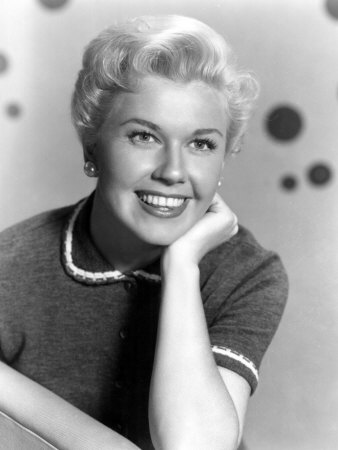
Doris Day Biography

Birth Name:Doris Mary Ann Von Kappelhoff 
Date of Birth:3 April 1922, 
Place of Birth:Cincinnati, Ohio, USA 
Nickname:Do-Do Clara Bix by Eunice 
Height:5' 7" (1.70 m) 


One of America's most prolific actresses was born Doris Mary Ann Kappelhoff on April 3, 1922, in Cincinnati, Ohio. Doris Day parents divorced while she was still a child and she lived with her mother. Like most little girls, Doris liked to dance. Doris Day aspired to become a professional ballerina, but an automobile accident that crushed a leg ended whatever hopes she had of dancing on stage. It was a terrible setback, but after taking singing lessons she found a new vocation, and began singing with local bands. Doris Day met trombonist Al Jorden, whom she married in 1941. Jorden was prone to violence and they divorced after two years, not long after the birth of their son Terry. In 1946, Doris married George Weidler, but this union lasted less than a year. Day's agent talked her into taking a screen test at Warner Bros. The executives there liked what they saw and signed her to a contract (her early credits are often confused with those of another actress named Doris Day, who appeared mainly in B westerns in the 1930s and 1940s). Doris Day first starring movie role was in Romance on the High Seas (1948). The next year, she made two more films, My Dream Is Yours (1949) and It's a Great Feeling (1949). Audiences took to her beauty, terrific singing voice and bubbly personality, and she turned in fine performances in the movies she made (in addition to several hit records). Doris Day made three films for Warner Bros. in 1950 and five more in 1951. In that year, she met and married Martin Melcher, who adopted her young son Terry, who later grew up to become Terry Melcher, a successful record producer. In 1953, Doris starred in Calamity Jane (1953), which was a major hit, and several more followed: Lucky Me (1954), Love Me or Leave Me (1955), The Man Who Knew Too Much (1956) and what is probably her best-known film, Pillow Talk (1959). Doris Day began to slow down her filmmaking pace in the 1960s, even though she started out the decade with a hit, Please Don't Eat the Daisies (1960).
Doris Day husband, who had also taken charge of her career, had made deals for her to star in films she didn't really care about, which led to a bout with exhaustion. The 1960s weren't to be a repeat of the previous busy decade. Doris Day  didn't make as many films as she had in that decade, but the ones she did make were successful: Do Not Disturb (1965), The Glass Bottom Boat (1966), Where Were You When the Lights Went Out? (1968) and With Six You Get Eggroll (1968). Martin Melcher died in 1968, and Doris never made another film, but she had been signed by Melcher to do her own TV series, "The Doris Day Show" (1968). That show, like her movies, was also successful, lasting until 1973. After her series went off the air, she made only occasional TV appearances. Today, she runs the Doris Day Animal League in Carmel, California, which advocates homes and proper care of household pets. What else would you expect of America's sweetheart?


Spouse
Barry Comden (14 April 1976 - 2 April 1982) (divorced)
Martin Melcher (3 April 1951 - 20 April 1968) (his death)
George Weidler (30 March 1946 - 31 May 1949) (divorced)
Al Jorden (March 1941 - 8 February 1943) (divorced) 1 child
Theme song: "Whatever Will Be, Will Be (Que Sera, Sera)", which she introduced in the 1956 film, The Man Who Knew Too Much (1956).


Where Are They Now
Doris now lives in Carmel, CA and actively works for the Doris Day Pet Foundation
(June 2008) Today at 86, she runs the Doris Day Animal League in Carmel, California which advocates homes and proper care of household pets.
(1976) Release of the book, "Doris Day: Doris Day  Own Story" by A.E. Hotchner.
(2000) Release of the book, "Doris Day: The Biography" by 'Michael Freeland'.
(2001) Release of the book, "Doris Day: The Illustrated Biography" by 'Michael Freeland'.
(January 2007) Special interview for the book "Que Sera Sera The Magic of Doris Day Through Television" by Pierre Patrick and Garry McGee. Published by BearManor Media.
(2008) Release of the book, "Doris Day: The Untold Story of the Girl Next Door" by David M. Kaufman.